

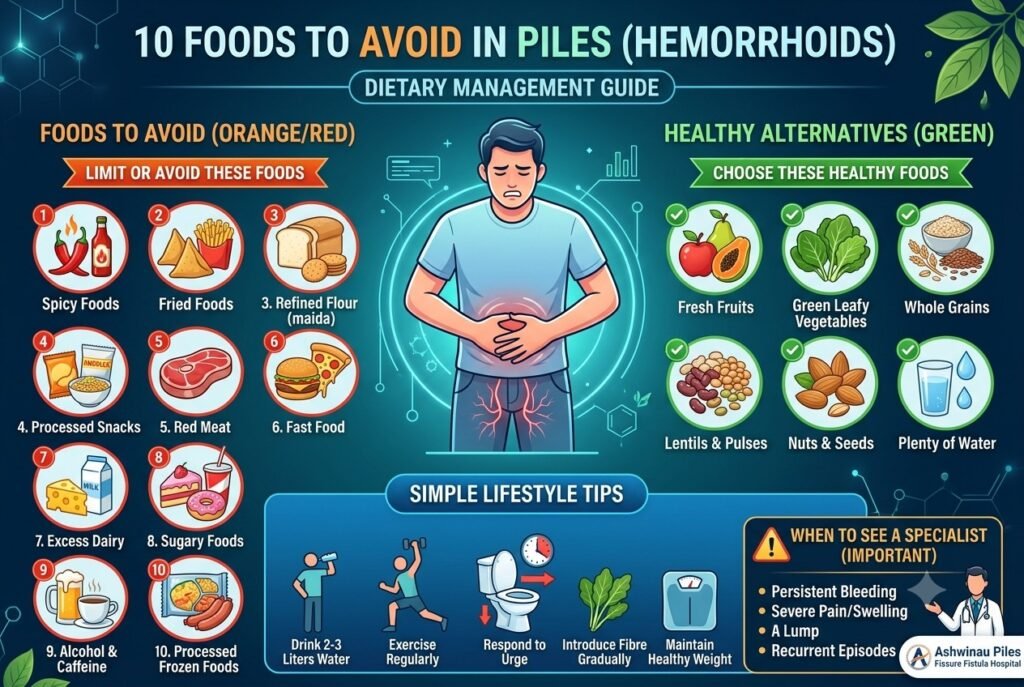
10 Foods to Avoid In Piles
Piles, also known as hemorrhoids, are swollen veins in the lower rectum or anus that can cause pain, itching, bleeding, and discomfort during bowel movements. While medical treatment may be necessary in some cases, your daily eating habits can significantly influence your symptoms. Certain foods may increase constipation, strain during bowel movements, or irritate the digestive tract, making piles more uncomfortable.
Knowing which foods to limit or avoid can help reduce flare-ups and support smoother bowel movements. In this article, we’ll discuss 10 foods to avoid in piles and healthier alternatives that promote better digestive health.
Why Does Diet Matter in Piles?
A balanced diet rich in fibre and fluids helps keep stools soft, reducing pressure on the veins around the anus. On the other hand, foods low in fibre or high in unhealthy fats can contribute to constipation, making bowel movements difficult and painful. Although dietary changes cannot cure every case of piles, they are an essential part of managing symptoms and preventing recurrence.
10 Foods to Avoid In Piles
- Spicy Foods
Chillies and heavily spiced dishes may not directly cause piles, but they can worsen burning, irritation, and discomfort during bowel movements in some individuals. If you notice symptoms becoming worse after eating spicy foods, it is best to reduce their intake.
- Fried Foods
Deep-fried snacks such as samosas, pakoras, chips, and French fries are often high in unhealthy fats and low in fibre. These foods slow digestion, increase constipation, and may make passing stools more difficult.
- Refined Flour (Maida) Products
White bread, pizza, burgers, pastries, biscuits, and other maida-based foods contain very little fibre. Frequent consumption can contribute to harder stools and increase straining during bowel movements.
- Processed and Packaged Snacks
Packaged chips, instant noodles, crackers, and ready-to-eat snacks are often high in sodium and preservatives while lacking dietary fibre. Regular intake may negatively affect digestive health and increase constipation.
- Red Meat
Red meat takes longer to digest than plant-based protein sources. Eating it in large quantities may slow bowel movements and increase the risk of constipation, especially when fibre intake is low.
- Fast Food
Burgers, pizzas, fried chicken, and similar fast foods are usually high in unhealthy fats and refined carbohydrates while being low in fibre. Replacing these meals with home-cooked, fibre-rich foods supports better digestive health.
- Excess Dairy Products
Large amounts of cheese, full-fat milk, and ice cream may contribute to constipation in some people. If dairy seems to worsen your symptoms, consider consuming it in moderation while maintaining adequate fibre intake.
- Sugary Foods and Soft Drinks
Cakes, chocolates, candies, sugary beverages, and desserts provide excess sugar but little nutritional value. Overconsumption may affect gut health and often replaces healthier, fibre-rich food choices.
- Alcohol and Excess Caffeine
Alcohol can contribute to dehydration, while consuming excessive amounts of coffee or caffeinated beverages may also reduce hydration in some individuals. Inadequate water intake can lead to harder stools, making piles symptoms worse.
- Highly Processed Frozen Foods
Frozen meals, processed meats, sausages, and similar convenience foods often contain high levels of sodium and preservatives with minimal fibre. These foods should be limited if you’re trying to improve bowel health.
What Should You Eat Instead?
Rather than focusing only on foods to avoid, include more foods that support healthy digestion.
Choose foods such as:
- Fresh fruits like apples, pears, papaya, and guava
- Green leafy vegetables
- Whole grains like oats and brown rice
- Lentils and pulses
- Nuts and seeds in moderation
- Plenty of water throughout the day
A fibre-rich diet helps soften stools, making bowel movements easier and reducing strain on the affected veins.
Simple Lifestyle Tips to Manage Piles
Diet works best when combined with healthy lifestyle habits. You can reduce the risk of worsening piles by:
- Drinking 2–3 litres of water daily
- Exercising regularly to support bowel movements
- Avoiding prolonged sitting on the toilet
- Responding promptly to the urge to pass stool
- Including fibre gradually in your meals
- Maintaining a healthy body weight
These simple habits can make a noticeable difference in your digestive health over time.
When Should You See a Specialist?
Dietary changes can help relieve mild symptoms, but they may not be enough if piles become severe or keep returning. You should consult piles specialist if you experience:
- Persistent bleeding during bowel movements
- Severe pain or swelling around the anus
- A lump that does not improve
- Recurrent episodes of piles
- Symptoms lasting despite dietary and lifestyle changes
At Ashwinau Piles Fissure Fistula Hospital, patients receive a thorough evaluation to identify the underlying cause of their symptoms. Depending on the severity of the condition, treatment may range from conservative management to advanced minimally invasive procedures designed for faster recovery and improved comfort.
Healthy Food Choices Can Help Manage Piles
Knowing the foods to avoid in piles is an important step toward managing symptoms and preventing future flare-ups. Limiting processed, fried, spicy, and low-fibre foods while choosing a balanced, fibre-rich diet can help improve bowel health and reduce discomfort. However, if your symptoms persist despite dietary improvements, seeking timely medical advice is essential. Early diagnosis and appropriate treatment can help you recover comfortably and prevent complications.