

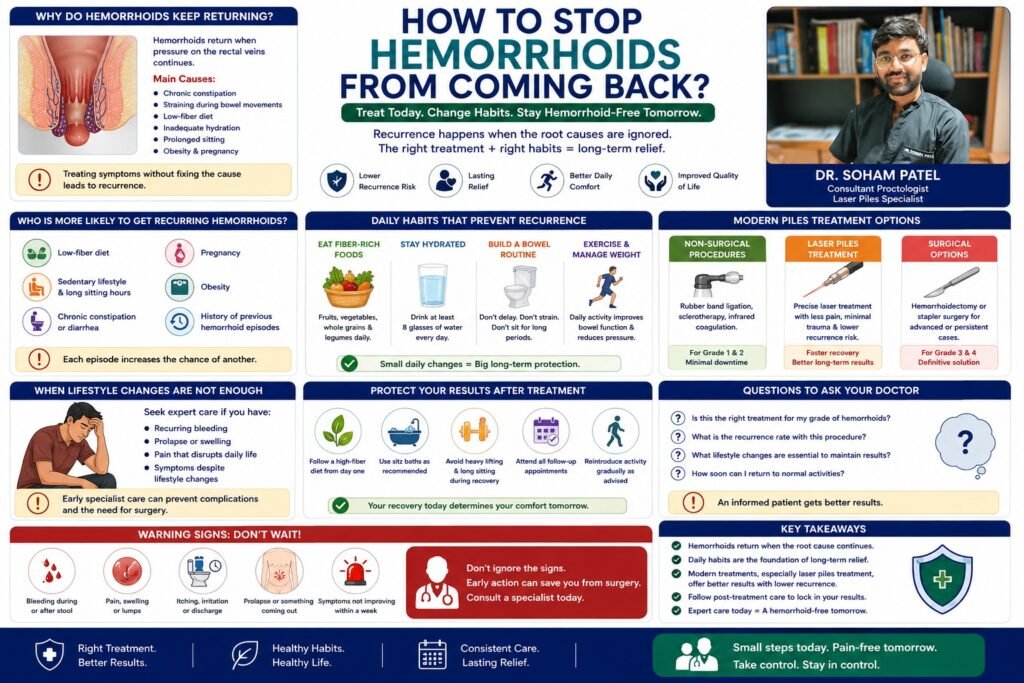
How to Stop Hemorrhoids from Coming Back?
Dealing with hemorrhoids once is frustrating enough. Dealing with them repeatedly is exhausting and unfortunately, very common. The truth is that most recurrences happen not because the treatment failed, but because the underlying causes were never fully addressed. Understanding why they come back is the first step toward making sure they do not.
Why Do Hemorrhoids Keep Returning After Treatment?
Many people treat the symptoms and move on without changing the habits that caused the problem in the first place. Hemorrhoids develop when increased pressure on the veins in the rectal and anal area causes them to swell. If that pressure is never relieved, the swelling will return regardless of how effective the initial treatment was.
The Root Causes Most People Never Address
Chronic constipation, prolonged straining, a low-fiber diet, inadequate hydration, and long hours of sitting are the most common drivers of recurring hemorrhoids. These are lifestyle patterns and without changing them, recurrence is almost inevitable.
Who Is More Likely to Get Recurring Hemorrhoids?
Some people are at higher risk of repeat episodes than others. Knowing your risk profile helps you take prevention more seriously.
Lifestyle and Medical Factors That Increase Risk
- A consistently low-fiber diet that produces hard, difficult-to-pass stools
- Sedentary lifestyle with prolonged sitting especially desk jobs
- Chronic constipation or diarrhea that puts repeated pressure on anal veins
- Pregnancy due to increased abdominal pressure on rectal veins
- Obesity excess body weight increases pressure on the pelvic region
- A history of previous hemorrhoid episodes each recurrence slightly increases the likelihood of another
Daily Habits That Form the Foundation of Prevention
No treatment surgical or otherwise works in isolation. Long-term prevention depends on daily habits that reduce pressure on the rectal veins consistently.
Fiber, Hydration, and Bowel Routine The Non-Negotiable Trio
A high-fibre diet keeps stools soft and reduces the need to strain. Aim for fruits, vegetables, legumes, and whole grains daily. Pair this with adequate water intake at least 8 glasses per day to keep the digestive system moving smoothly.
Why Your Toilet Habits Matter More Than You Think?
Avoid spending extended time on the toilet. Do not delay the urge to pass stool holding it in leads to harder stools and more straining. Never force a bowel movement. These small adjustments have a surprisingly significant impact on recurrence risk.
Exercise and Weight Management
Regular physical activity improves bowel function and reduces pelvic pressure. Even a 20 to 30 minute walk daily can make a measurable difference in both prevention and recovery from hemorrhoids.
When Lifestyle Changes Are Not Enough
If your hemorrhoids keep returning despite consistent lifestyle adjustments, your body is telling you that it needs more targeted medical intervention. Recurring bleeding, prolapse, or pain that disrupts daily life are signs that home management has reached its limit.
Modern Piles Treatment Options That Address Recurrence at the Root
The right piles treatment does more than provide temporary relief it addresses the structural problem to reduce the likelihood of recurrence.
Non-Surgical Procedures for Mild to Moderate Cases
For Grade 1 and Grade 2 hemorrhoids, procedures like rubber band ligation, sclerotherapy, and infrared coagulation can effectively shrink hemorrhoidal tissue with minimal downtime. These are performed in a clinic setting and require no general anaesthesia.
Laser Piles Treatment Precision That Reduces Recurrence Risk
Laser piles treatment uses a focused laser beam to seal and destroy hemorrhoidal tissue with exceptional precision. Unlike conventional procedures, it causes minimal trauma to surrounding tissue, results in significantly less post-operative discomfort, and carries a lower recurrence rate when combined with proper lifestyle changes. It is increasingly the preferred choice for patients who want effective treatment with faster recovery and reduced risk of the problem returning.
Surgical Options for Persistent or Advanced Cases
For Grade 3 and Grade 4 hemorrhoids that have not responded to other treatments, surgical options like hemorrhoidectomy or stapler surgery offer a more definitive solution. These procedures remove or reposition the hemorrhoidal tissue completely and are recommended when recurrence has become a chronic pattern.
Protecting Your Results After Treatment
The period immediately following any piles treatment is critical. What you do during recovery directly influences whether your results last.
Post-Treatment Habits That Lock In Long-Term Results
- Follow a high-fiber diet from day one of recovery do not wait until symptoms return
- Use sitz baths as recommended to promote healing and reduce inflammation
- Avoid heavy lifting and prolonged sitting during the recovery window
- Attend all follow-up appointments do not skip them even if you feel fine
- Reintroduce physical activity gradually as advised by your specialist
Questions to Ask Your Doctor Before Starting Treatment
Being an informed patient leads to better outcomes. Before committing to any treatment plan, ask:
- Is this the right treatment for my specific grade of hemorrhoids?
- What is the recurrence rate associated with this procedure?
- What lifestyle changes are essential to maintain results after treatment?
- How soon can I return to normal daily activities?
Hemorrhoids Can Be Stopped. But It Takes More Than One Step
Recurring hemorrhoids are not inevitable they are preventable. Whether you are managing a mild case with lifestyle changes, exploring non-surgical piles treatment, or considering laser piles treatment for a more lasting solution, the key is consistency. Treat the condition properly, change the habits that caused it, and follow through on post-treatment care. That combination is what actually stops hemorrhoids from coming back.