

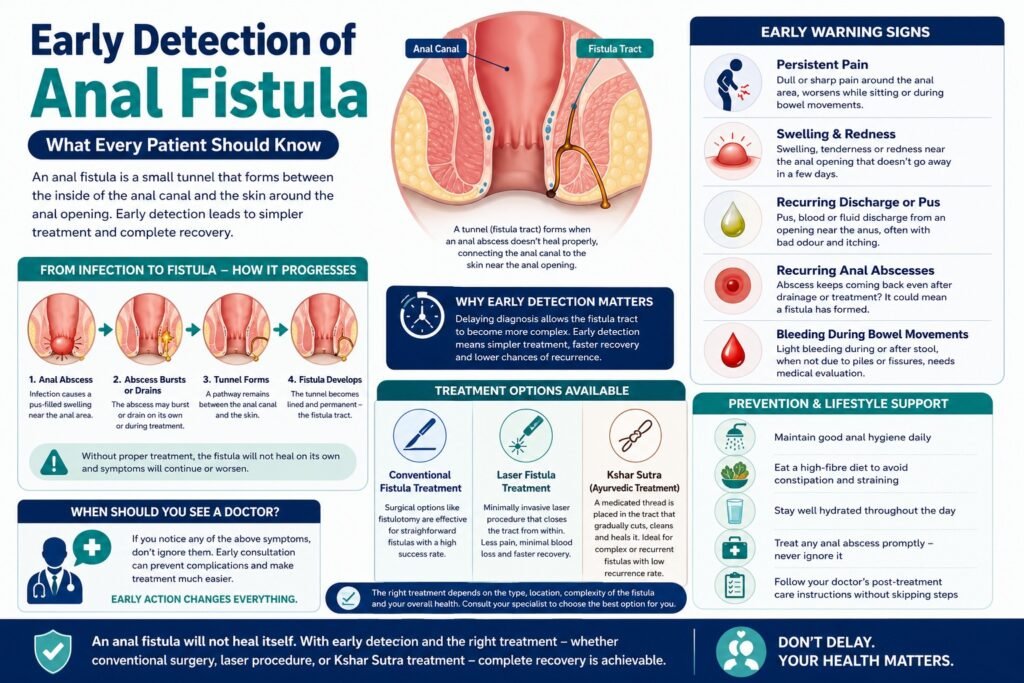
Early Detection of Anal Fistula - What Every Patient Should Know
An anal fistula is not something most people talk about openly but it is something many people quietly suffer through, often without realizing what it is. The discomfort, the recurring infections, the unexplained discharge these are not random. They are your body’s way of telling you that something needs attention. And the earlier you listen, the better your chances of a smooth, complete recovery.
What Is an Anal Fistula and How Does It Form?
An anal fistula is a small tunnel that forms between the inside of the anal canal and the skin around the anal opening. It almost always develops as a result of an anal abscess a painful, pus-filled infection near the anal area. When that abscess does not heal properly or drains on its own without treatment, the tunnel left behind becomes a fistula.
From Infection to Fistula How It Progresses
The process is gradual. An untreated or poorly treated anal abscess creates a pathway through the tissue. Over time, this pathway becomes lined and permanent forming the fistula tract. Without proper fistula treatment, this tract will not close on its own and will continue to cause symptoms.
Early Warning Signs You Should Never Ignore
Catching an anal fistula early makes treatment significantly simpler. Here are the signs that deserve your immediate attention:
Persistent Pain Around the Anal Area
A dull, throbbing, or sharp pain near the anal region especially one that worsens when you sit, move, or pass stool is one of the earliest and most consistent signs of an anal fistula.
Swelling and Redness Near the Anal Skin
Visible swelling, tenderness, or redness around the anal opening that does not resolve within a few days is a warning sign. Many patients mistake this for a simple skin irritation and delay seeking care.
Recurring Discharge or Pus
One of the most telling signs of an anal fistula is a persistent or recurring discharge of pus, blood, or fluid from an opening near the anal area. This discharge may have an unpleasant odour and can cause itching or skin irritation around the area.
Recurring Anal Abscesses
If you have had an anal abscess before and it keeps coming back even after it was drained or treated there is a strong possibility that a fistula has already formed. Recurring abscesses are one of the clearest indicators that something deeper needs to be addressed.
Bleeding During Bowel Movements
Light bleeding during or after passing stool, when not linked to hemorrhoids or fissures, can sometimes be associated with an anal fistula. Combined with any of the above symptoms, it warrants prompt medical evaluation.
Why Early Detection Matters?
Delaying diagnosis allows the fistula tract to become more complex. A simple fistula that could have been resolved with a straightforward procedure can evolve into a multi-tract or horseshoe fistula significantly complicating treatment and recovery. Early detection literally determines how easy or difficult your treatment journey will be.
Treatment Options Available:
The right treatment depends on the type, location, and complexity of the fistula. Here is what modern medicine and traditional practice offer:
Conventional Fistula Treatment
Surgical options like fistulotomy where the fistula tract is cut open and allowed to heal remain the most widely used approach. It is effective for straightforward fistulas and has a high success rate when performed by an experienced surgeon.
Laser Fistula Treatment – Precision With Minimal Downtime
Laser fistula treatment is a modern, minimally invasive option that uses laser energy to close and destroy the fistula tract from within. It involves no large incisions, minimal blood loss, and a significantly faster recovery compared to conventional surgery. It is particularly well-suited for patients who want to return to normal life quickly.
Kshar Sutra – Ayurvedic Treatment With Centuries of Proof
Kshar Sutra treatment is a time-tested ayurvedic procedure where a medicated thread is passed through the fistula tract. The thread slowly cuts, cleans, and heals the tract simultaneously. It is especially recommended for complex or recurrent fistulas and carries a very low recurrence rate. For patients seeking a natural, non-surgical path, ayurvedic treatment through Kshar Sutram offers a reliable and well-documented alternative.
Which Treatment Is Right for You?
No single treatment fits every patient. Your doctor will evaluate the fistula’s depth, complexity, and your overall health before recommending an approach. Key questions to ask your specialist include:
- Is my fistula simple or complex?
- What is the expected recovery time for each option?
- What are the chances of recurrence with the recommended treatment?
Being informed puts you in a stronger position to make the right decision for your body.
Prevention and Lifestyle Support During Recovery
Whether you are recovering from fistula treatment or trying to prevent recurrence, these habits make a meaningful difference:
- Maintain good anal hygiene daily
- Eat a high-fibre diet to avoid constipation and straining
- Stay well hydrated throughout the day
- Treat any anal abscess promptly never ignore one hoping it will resolve on its own
- Follow your doctor’s post-treatment care instructions without skipping steps
Early Action Changes Everything
An anal fistula will not heal itself. But with early detection and the right treatment whether conventional surgery, laser fistula procedure, or kshar sutra treatment complete recovery is absolutely achievable. The earlier you act, the simpler the path forward. Do not let embarrassment or fear delay care that your body genuinely needs.