

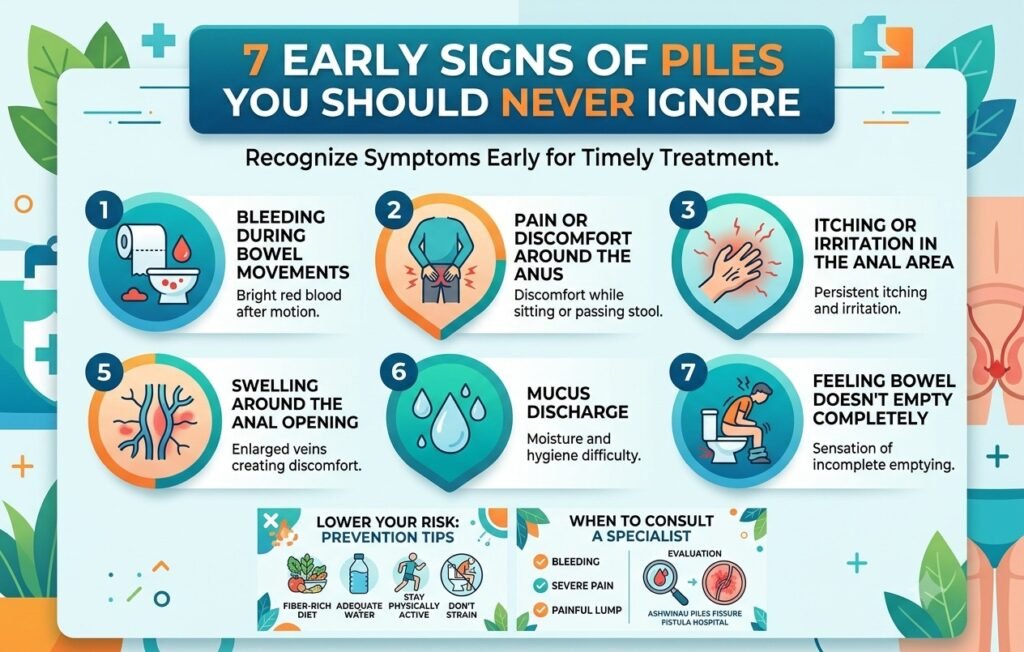
7 Early Signs of Piles You Should Never Ignore
Piles, also known as hemorrhoids, are a common condition that affects people of all ages. They develop when the veins in the lower rectum or anus become swollen due to increased pressure, often caused by chronic constipation, prolonged sitting, pregnancy, or frequent straining during bowel movements. While piles are usually treatable, many people ignore the early warning signs because they feel embarrassed or assume the symptoms will go away on their own.
Recognising the symptoms early can help prevent the condition from worsening and allow timely treatment. Here are 7 early signs of piles you should never ignore.
Why Recognising Piles Symptoms Early Matters
In the initial stages, piles may cause only mild discomfort, making them easy to overlook. However, delaying treatment can lead to increased pain, persistent bleeding, larger swollen veins, and complications that may require advanced treatment. Seeking medical advice when symptoms first appear often leads to quicker recovery and more effective management.
7 Early Signs That May Indicate Piles:
- Bleeding During Bowel Movements
One of the most common early symptoms of piles is bright red blood on the toilet paper, in the toilet bowl, or on the stool after passing motion. Although bleeding is often associated with piles, it can also indicate other digestive conditions. Any unexplained rectal bleeding should always be evaluated by a medical professional.
- Pain or Discomfort Around the Anus
Pain during or after passing stools may indicate inflamed or swollen hemorrhoids. Some people experience mild discomfort, while others may have sharp pain that makes sitting or walking uncomfortable. The severity often depends on the type and stage of the piles.
- Itching or Irritation in the Anal Area
Persistent itching around the anus is another early sign that many people ignore. This irritation may occur due to mucus leakage or inflammation caused by swollen hemorrhoidal tissue. Constant scratching can further irritate the skin and worsen discomfort.
- A Lump Near the Anus
You may notice a small lump or swelling near the anal opening while cleaning the area or during bathing. In some cases, the lump may disappear on its own, while in others it may remain outside the anus. A lump should always be examined to determine whether it is caused by piles or another anorectal condition.
- Swelling Around the Anal Opening
Swelling caused by enlarged veins may create discomfort while sitting, exercising, or passing stools. The swelling may feel tender to touch and can gradually increase if left untreated.
- Mucus Discharge or Difficulty Keeping the Area Clean
Some individuals with piles experience mucus discharge after bowel movements. This may leave the anal area feeling moist, causing irritation, itching, and difficulty maintaining hygiene. Persistent mucus discharge should not be ignored.
- Feeling That the Bowel Doesn’t Empty Completely
A sensation of incomplete bowel emptying even after passing stool may occur when enlarged hemorrhoids interfere with normal bowel movements. This feeling may lead to repeated straining, which can further aggravate piles symptoms.
Can These Symptoms Be Caused by Other Conditions?
Although these symptoms are commonly associated with piles, they are not exclusive to the condition. Anal fissures, fistulas, infections, colorectal polyps, inflammatory bowel disease, and even colorectal cancer may present with similar symptoms.
For this reason, self-diagnosis should be avoided. A proper medical examination helps identify the exact cause and ensures appropriate treatment is started without delay.
When Should You Consult a Specialist?
It is advisable to seek medical attention if you experience:
- Bleeding that continues or recurs frequently
- Severe pain during bowel movements
- A painful or enlarging lump near the anus
- Persistent itching or swelling
- Difficulty sitting comfortably
- Symptoms that do not improve with dietary and lifestyle changes
At Ashwinau Piles Fissure Fistula Hospital, patients undergo a detailed evaluation to determine whether their symptoms are caused by piles or another anorectal condition. Based on the diagnosis, the specialists recommend the most suitable treatment approach, helping patients achieve lasting relief while minimising discomfort.
Tips to Lower Your Risk of Piles
Simple lifestyle changes can reduce the likelihood of developing piles or experiencing recurrent symptoms:
- Eat a fibre-rich diet with fruits, vegetables, and whole grains.
- Drink adequate water throughout the day.
- Avoid straining during bowel movements.
- Stay physically active to support healthy digestion.
- Do not delay the urge to pass stool.
- Maintain a healthy body weight.
These healthy habits can improve bowel function and reduce pressure on the veins around the anus.
Don't Ignore Persistent Symptoms
Recognising the 7 early signs of piles you should never ignore can help you seek treatment before the condition becomes more painful or difficult to manage. While mild symptoms may improve with dietary and lifestyle changes, persistent bleeding, swelling, pain, or recurring discomfort should always be evaluated by a specialist. If you’re experiencing these symptoms, consulting the experienced team at Ashwinau Piles Fissure Fistula Hospital can help you receive an accurate diagnosis and effective treatment for long-term relief.