

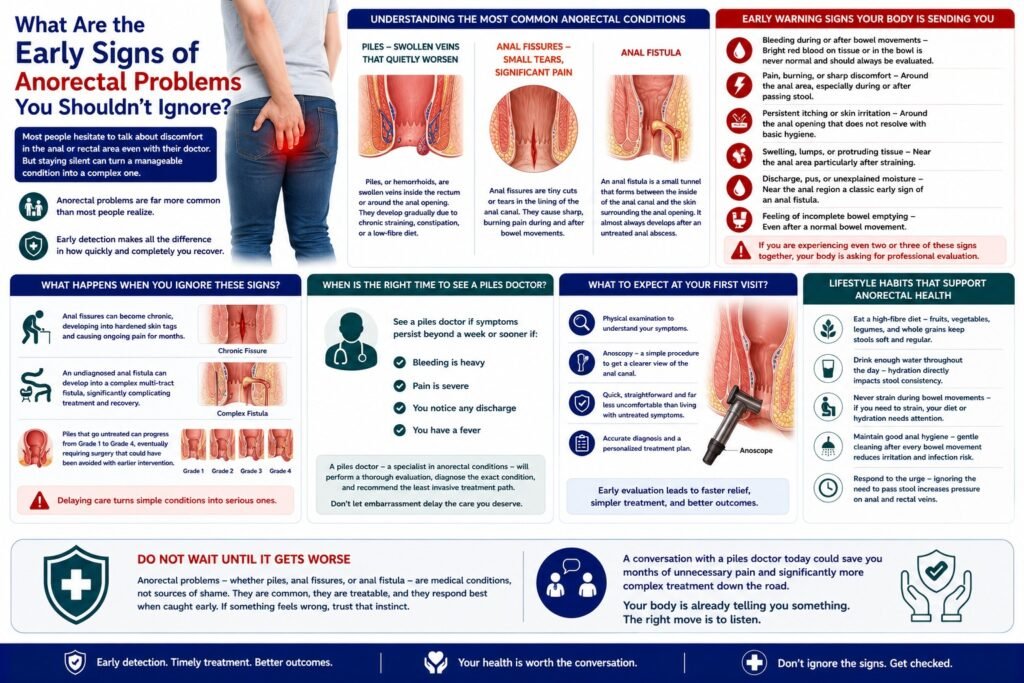
What Are the Early Signs of Anorectal Problems You Shouldn't Ignore?
Most people hesitate to talk about discomfort in the anal or rectal area even with their doctor. But staying silent about these symptoms often turns a manageable condition into a complex one. Anorectal problems are far more common than most people realize, and early detection makes all the difference in how quickly and completely you recover.
Why Anorectal Health Deserves More Attention Than It Gets?
The discomfort, bleeding, or irritation you keep dismissing as “nothing serious” may be your body signalling something that genuinely needs care. Anorectal conditions rarely resolve on their own without proper treatment and the longer they go unaddressed, the more complicated they become.
How Early Detection Changes Everything?
Conditions caught in their early stages respond far better to simpler, less invasive treatments. What begins as mild discomfort can escalate into chronic pain, infection, or surgical intervention if left unattended.
Understanding the Most Common Anorectal Conditions:
Before recognizing the signs, it helps to understand what you may be dealing with.
Piles – Swollen Veins That Quietly Worsen
Piles, or hemorrhoids, are swollen veins inside the rectum or around the anal opening. They develop gradually due to chronic straining, constipation, or a low-fibre diet. Many people have piles for months before they notice any symptoms.
Anal Fissures – Small Tears, Significant Pain
Anal fissures are tiny cuts or tears in the lining of the anal canal. Despite their small size, they cause sharp, burning pain during and after bowel movements. They are often triggered by passing hard stools and can become chronic if not treated promptly.
Anal Fistula
An anal fistula is a small tunnel that forms between the inside of the anal canal and the skin surrounding the anal opening. It almost always develops after an untreated anal abscess and will not heal without medical intervention.
Early Warning Signs Your Body Is Sending You:
These are the signs that deserve immediate attention, not tomorrow, not next week:
- Bleeding during or after bowel movements – bright red blood on tissue or in the bowel, is never normal and should always be evaluated
- Pain, burning, or sharp discomfort – around the anal area, especially during or after passing stool
- Persistent itching or skin irritation – around the anal opening that does not resolve with basic hygiene
- Swelling, lumps, or protruding tissue – near the anal area, particularly after straining
- Discharge, pus, or unexplained moisture – near the anal region, is aclassic early sign of an anal fistula
- Feeling of incomplete bowel emptying – even after a normal bowel movement
If you are experiencing even two or three of these signs together, your body is asking for professional evaluation.
What Happens When You Ignore These Signs?
Delaying care is where simple conditions become serious ones. Untreated anal fissures can become chronic, developing into hardened skin tags and causing ongoing pain for months. An undiagnosed anal fistula can develop into a complex multi-tract fistula, significantly complicating treatment and recovery. Piles that go untreated can progress from Grade 1 to Grade 4, eventually requiring surgery that could have been avoided with earlier intervention.
When Is the Right Time to See a Piles Doctor?
The right time is as soon as you notice symptoms that persist beyond a week or sooner if the bleeding is heavy, the pain is severe, or you notice any discharge or fever. A piles doctor a specialist in anorectal conditions will perform a thorough evaluation, diagnose the exact condition, and recommend the least invasive treatment path appropriate for your case.
Do not let embarrassment delay a consultation that could resolve your problem quickly and completely.
What to Expect at Your First Visit?
Your specialist will begin with a physical examination and may perform a simple procedure called an anoscopy to get a clearer view of the anal canal. It is a quick, straightforward process and far less uncomfortable than living with untreated symptoms.
Lifestyle Habits That Support Anorectal Health
Whether you are in recovery or trying to prevent these conditions from developing, these daily habits genuinely help:
- Eat a high-fibre diet fruits, vegetables, legumes, and whole grains keep stools soft and regular
- Drink enough water throughout the day hydration directly impacts stool consistency
- Never strain during bowel movements if you need to strain, your diet or hydration needs attention
- Maintain good anal hygiene gentle cleaning after every bowel movement reduces irritation and infection risk
- Respond to the urge ignoring the need to pass stool increases pressure on anal and rectal veins
Do Not Wait Until It Gets Worse
Anorectal problems whether piles, anal fissures, or anal fistula are medical conditions, not sources of shame. They are common, they are treatable, and they respond best when caught early. If something feels wrong, trust that instinct. A conversation with a piles doctor today could save you months of unnecessary pain and significantly more complex treatment down the road. Your body is already telling you something. The right move is to listen.