

Piles vs Fissure vs Fistula – Symptoms, Causes & Key Differences Explained
Introduction: Why These Conditions Are Often Confused
Pain, discomfort, or bleeding in the anal region is often quickly assumed to be piles. However, not all such symptoms point to a single condition. Piles, fissures, and fistulas are three different anorectal problems that affect the same area but have very different causes, symptoms, and treatments. Understanding the difference is important because incorrect assumptions can delay proper care and worsen the condition.
What Are Piles, Fissure, and Fistula?
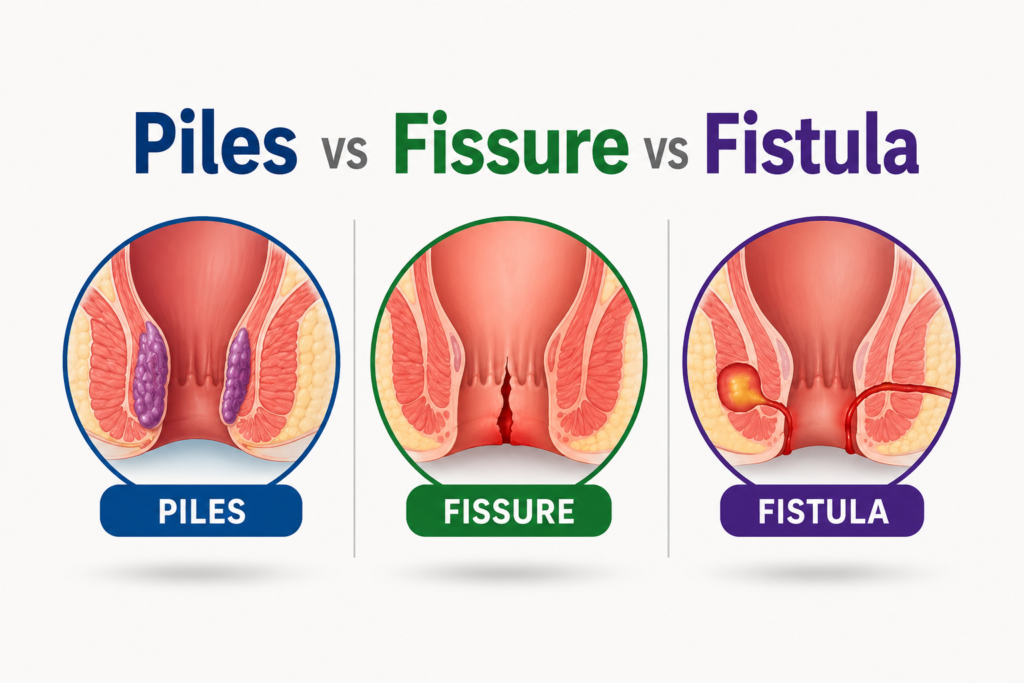
Piles, also known as hemorrhoids, are swollen veins in the rectum or around the anus. They can be internal or external and are usually caused by increased pressure in the lower rectum. Common factors include chronic constipation, straining during bowel movements, a low-fiber diet, prolonged sitting, pregnancy, and obesity. While early-stage piles may seem manageable, neglecting them can lead to more serious issues.
Is Piles Dangerous If Left Untreated?
What Are Piles (Hemorrhoids)?
Piles, also known as hemorrhoids, are swollen and inflamed blood vessels in the rectum or around the anus. They usually develop due to increased pressure in the lower rectum, often caused by constipation, straining during bowel movements, or prolonged sitting. Piles may cause painless bleeding, itching, or a noticeable lump near the anus.
What Is an Anal Fissure?
An anal fissure is a small tear or cut in the lining of the anus. It is commonly caused by passing hard or large stools. Unlike piles, fissures are known for causing sharp pain during and after bowel movements. The pain can be intense and may last for several hours.
What Is an Anal Fistula?
An anal fistula is an abnormal tunnel that forms between the anal canal and the skin near the anus, usually due to an infection. It often develops after an abscess that did not heal properly. Fistulas are more serious and may lead to persistent discharge, swelling, and recurring infections.
Key Differences Between Piles, Fissure, and Fistula
Difference Based on Cause
Piles are mainly caused by pressure and swelling of veins, fissures occur due to tearing of the anal lining, and fistulas result from infections that create abnormal connections in the tissue.
Difference Based on Symptoms
While piles often present with painless bleeding and mild discomfort, fissures are associated with severe pain during bowel movements. Fistulas, on the other hand, commonly cause pus discharge, swelling, and repeated infections.
Difference Based on Severity
Piles and fissures can often be managed with early treatment and lifestyle changes. However, fistulas usually require medical procedures or surgery for complete healing.
Common Symptoms You Should Not Ignore
Symptoms of Piles
- Bleeding during bowel movements without significant pain
- Itching or irritation around the anal area
- Swelling or a lump near the anus
- Discomfort while sitting
Symptoms of Fissure
- Sharp, cutting pain during bowel movements
- Burning sensation after passing stool
- Visible tear or crack in the anal skin
- Fear of passing stools due to pain
Symptoms of Fistula
- Persistent pus or fluid discharge
- Pain and swelling near the anus
- Recurrent infections or abscess formation
- Irritation of the surrounding skin
Causes & Risk Factors
These conditions are often linked to lifestyle habits and certain medical factors. A low-fibre diet, chronic constipation, and straining during bowel movements are common contributors. Prolonged sitting, obesity, and lack of physical activity can also increase the risk. Infections play a major role in the development of fistulas, while pregnancy can increase the chances of developing piles.
When Should You See a Doctor?
It is important not to ignore symptoms like bleeding, persistent pain, or discharge. If your symptoms last more than a few days or keep recurring, consulting a specialist is essential. Early diagnosis helps prevent complications and ensures you receive the right treatment for the specific condition.
Diagnosis & Treatment Approach
How Doctors Diagnose the Condition
Doctors usually begin with a physical examination and a detailed medical history. In some cases, additional tests may be recommended to confirm the diagnosis and rule out other conditions.
Treatment Options for Each Condition
Treatment depends on the condition and its severity. Piles are often managed with dietary changes, medications, or minimally invasive procedures. Fissures usually heal with proper diet, medications, and lifestyle adjustments. Fistulas, however, typically require surgical treatment to remove the infected tract and prevent recurrence.
Why Proper Diagnosis Matters
Although these conditions may appear similar, their treatments are very different. Self-diagnosis can lead to incorrect treatment and prolonged discomfort. A proper medical evaluation ensures accurate diagnosis and effective management.
Prevention Tips for Better Anal Health
Maintaining good bowel habits is key to preventing these conditions. A fibre-rich diet, adequate hydration, and regular physical activity help ensure smooth digestion. Avoid straining during bowel movements and respond promptly to the urge to pass stool to reduce pressure on the anal region.
Final Thoughts: Know the Difference, Choose the Right Care
Piles, fissures, and fistulas may share similar symptoms, but they are distinct conditions requiring different approaches to treatment. Understanding these differences can help you seek timely care and avoid complications. If you are experiencing any discomfort, pain, or unusual symptoms, do not delay seeking professional advice.