

When Should You See a Proctologist? Signs You Should Never Ignore
Introduction: Why People Delay Seeing a Proctologist
Many people experience symptoms like pain, discomfort, or bleeding in the anal region but hesitate to seek medical help. The reasons are often embarrassment, fear, or the assumption that the issue will resolve on its own. However, delaying consultation can allow minor conditions to progress into more serious problems. Understanding when to see a proctologist can help you take timely action and avoid unnecessary complications.
Who Is a Proctologist and What Do They Treat?
A proctologist is a specialist trained to diagnose and treat conditions related to the rectum, anus, and lower part of the digestive tract. These experts commonly manage issues such as piles (hemorrhoids), anal fissures, fistulas, infections, and other anorectal disorders. Their role is not only to treat existing conditions but also to guide patients on prevention and long-term care.
Common Symptoms That Should Not Be Ignored
Rectal Bleeding
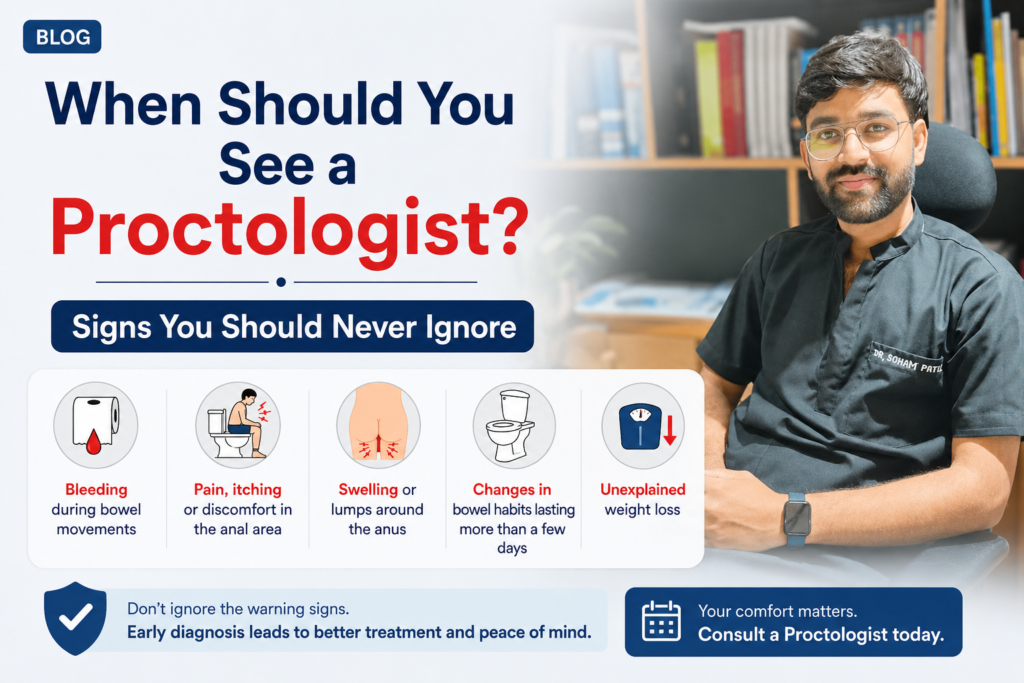
Bleeding during or after bowel movements is one of the most common warning signs. Even if it appears minor or occasional, it should never be ignored, as it may indicate piles or other underlying conditions.
Persistent Pain or Burning
Pain in the anal region, especially during bowel movements, can signal conditions like fissures or infections. If the pain continues for several days, it is advisable to consult a specialist.
Lump or Swelling Near the Anus
A noticeable lump or swelling may be associated with piles or an abscess. It may cause discomfort while sitting or moving.
Discharge or Signs of Infection
Pus or fluid discharge from the anal area is not normal and often points toward a fistula or infection that requires medical attention.
Changes in Bowel Habits
Frequent constipation, diarrhea, or a feeling of incomplete bowel movement may also indicate an underlying issue that needs evaluation.
Warning Signs That Require Immediate Medical Attention
Heavy or Continuous Bleeding
If the bleeding is excessive or does not stop, it requires urgent medical evaluation to prevent complications.
Severe Pain That Doesn’t Improve
Intense pain that persists despite home remedies may indicate a more serious condition that needs proper diagnosis.
Recurrent Symptoms Despite Treatment
If symptoms keep returning even after medication or lifestyle changes, it is a sign that the root cause has not been addressed.
Fever with Pain or Swelling
Fever along with anal pain or swelling may indicate an infection or abscess that needs immediate care.
Conditions That Often Require a Proctologist Visit
When Should You See a Doctor?
It is important not to ignore symptoms like bleeding, persistent pain, or discharge. If your symptoms last more than a few days or keep recurring, consulting a specialist is essential. Early diagnosis helps prevent complications and ensures you receive the right treatment for the specific condition.
When Is the Right Time to Seek Help?
If your symptoms are mild, you may try basic lifestyle changes like improving your diet and hydration for a few days. However, if symptoms persist for more than one to two weeks, consulting a proctologist is important. Severe symptoms such as pain, bleeding, or discharge should never be ignored and require immediate medical attention.
What to Expect During Your First Visit
Visiting a proctologist is usually simple and comfortable. The doctor will begin by understanding your symptoms and medical history. A basic physical examination may be performed to identify the issue. In some cases, additional tests may be suggested, but only when necessary. Early consultation often leads to quicker and less invasive treatment.
Why Early Diagnosis Matters
Timely diagnosis plays a key role in preventing complications. Many anorectal conditions are easier to treat in the early stages and may not require surgery if addressed promptly. Ignoring symptoms can lead to increased discomfort, prolonged treatment, and a greater risk of complications.
Prevention Tips for Better Anal Health
Maintaining healthy bowel habits is essential for preventing these issues. A fiber-rich diet, proper hydration, and regular physical activity can improve digestion and reduce strain during bowel movements. Avoiding prolonged sitting and responding promptly to the urge to pass stool can also help maintain good anal health.
Don’t Ignore the Signs Act Early
Recognizing the early signs and seeking timely medical advice can make a significant difference in your health. While it may feel uncomfortable to discuss these issues, consulting a proctologist ensures accurate diagnosis and effective treatment. Taking the right step at the right time can prevent minor problems from becoming serious conditions.