Author name: Ashwinau Hospital

Uncategorized

Is Piles Dangerous If Left Untreated? Risks You Shouldn’t Ignore

Introduction: Why Many People Ignore Piles Piles are a common condition, yet many people hesitate to talk about them or seek medical help. Due to embarrassment or the belief that the problem will resolve on its own, treatment is often delayed. However, ignoring symptoms can lead to worsening discomfort and complications over time. Seeking timely piles treatment is important not only for relief but also to prevent the condition from progressing. What Are Piles and Why Do They Develop? Piles, also known as hemorrhoids, are swollen veins in the rectum or around the anus. They can be internal or external and are usually caused by increased pressure in the lower rectum. Common factors include chronic constipation, straining during bowel movements, a low-fiber diet, prolonged sitting, pregnancy, and obesity. While early-stage piles may seem manageable, neglecting them can lead to more serious issues. Is Piles Dangerous If Left Untreated? In the early stages, piles may cause mild symptoms such as slight discomfort, itching, or occasional bleeding. However, if left untreated, the condition can gradually worsen. What begins as a minor inconvenience can develop into persistent pain, swelling, and more complex complications that require medical intervention. Complications of Untreated Piles You Should Know Chronic Bleeding and Anemia: Repeated bleeding over time can lead to iron deficiency anemia, causing weakness, fatigue, and reduced overall health. Severe Pain and Discomfort: As piles progress, inflammation increases, making daily activities like sitting or passing stool painful. Prolapsed Piles: In advanced cases, the swollen veins may protrude outside the anus, leading to irritation and hygiene challenges. Thrombosed Piles: Blood clots can form within the piles, causing sudden and intense pain along with swelling. Infection and Irritation: Untreated piles can lead to irritation of surrounding skin and, in some cases, infection. Warning Signs That Indicate You Need Immediate Care Certain symptoms should not be ignored and require prompt medical attention. These include persistent or heavy bleeding, severe pain during bowel movements, a lump that does not go back inside, or symptoms that do not improve with home remedies. At this stage, consulting a specialist for proper piles treatment becomes essential to avoid further complications. Treatment Options for Piles The choice of treatment depends on the severity of the condition and the symptoms experienced. Non-Surgical and Minimally Invasive Options: In the early stages, lifestyle changes such as increasing fiber intake, staying hydrated, and avoiding straining can help manage symptoms. Medical procedures like Infrared Coagulation, Rubber Band Ligation, and Sclerotherapy are commonly used to treat mild to moderate piles effectively.   Advanced and Surgical Treatments: For more severe cases, advanced solutions may be required. Laser treatment for piles has become a preferred option due to its precision, minimal pain, and faster recovery. Traditional surgical approaches such as Hemorrhoidectomy and Stapler Surgery are also effective, especially in advanced or recurrent cases. Why Early Treatment Makes a Big Difference Early diagnosis and treatment can prevent complications and reduce the need for more invasive procedures. Addressing the problem at the right time ensures quicker recovery, less discomfort, and better long-term outcomes. Ignoring symptoms, on the other hand, can lead to prolonged suffering and more complex treatments. Prevention Tips to Avoid Piles Getting Worse Maintaining healthy bowel habits is key to preventing piles from worsening. A fiber-rich diet, adequate hydration, and regular physical activity help ensure smooth digestion. Avoiding prolonged sitting and reducing strain during bowel movements can also significantly lower the risk of progression. Early Treatment Can Prevent Serious Complications Piles may start as a minor issue, but they can become serious if left untreated. Recognizing the symptoms early and seeking timely medical advice can help prevent complications and ensure effective treatment. Taking action at the right time is the best way to protect your health and comfort.

Uncategorized

When Should You See a Proctologist? Signs You Should Never Ignore

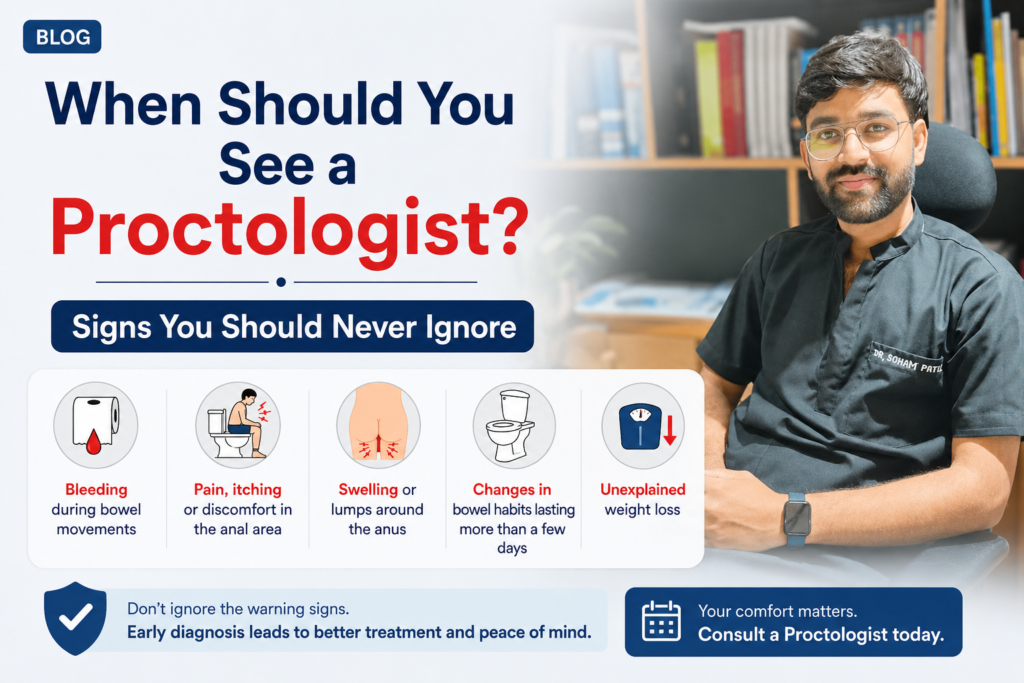
When Should You See a Proctologist? Signs You Should Never Ignore Introduction: Why People Delay Seeing a Proctologist Many people experience symptoms like pain, discomfort, or bleeding in the anal region but hesitate to seek medical help. The reasons are often embarrassment, fear, or the assumption that the issue will resolve on its own. However, delaying consultation can allow minor conditions to progress into more serious problems. Understanding when to see a proctologist can help you take timely action and avoid unnecessary complications. Who Is a Proctologist and What Do They Treat? A proctologist is a specialist trained to diagnose and treat conditions related to the rectum, anus, and lower part of the digestive tract. These experts commonly manage issues such as piles (hemorrhoids), anal fissures, fistulas, infections, and other anorectal disorders. Their role is not only to treat existing conditions but also to guide patients on prevention and long-term care. Common Symptoms That Should Not Be Ignored Rectal Bleeding Bleeding during or after bowel movements is one of the most common warning signs. Even if it appears minor or occasional, it should never be ignored, as it may indicate piles or other underlying conditions. Persistent Pain or Burning Pain in the anal region, especially during bowel movements, can signal conditions like fissures or infections. If the pain continues for several days, it is advisable to consult a specialist. Lump or Swelling Near the Anus A noticeable lump or swelling may be associated with piles or an abscess. It may cause discomfort while sitting or moving. Discharge or Signs of Infection Pus or fluid discharge from the anal area is not normal and often points toward a fistula or infection that requires medical attention. Changes in Bowel Habits Frequent constipation, diarrhea, or a feeling of incomplete bowel movement may also indicate an underlying issue that needs evaluation. Warning Signs That Require Immediate Medical Attention Heavy or Continuous Bleeding If the bleeding is excessive or does not stop, it requires urgent medical evaluation to prevent complications. Severe Pain That Doesn’t Improve Intense pain that persists despite home remedies may indicate a more serious condition that needs proper diagnosis. Recurrent Symptoms Despite Treatment If symptoms keep returning even after medication or lifestyle changes, it is a sign that the root cause has not been addressed. Fever with Pain or Swelling Fever along with anal pain or swelling may indicate an infection or abscess that needs immediate care. Conditions That Often Require a Proctologist Visit Certain conditions almost always require expert evaluation. These include recurring piles, chronic fissures that do not heal, and fistulas that cause repeated infections or discharge. Early consultation helps in managing these conditions effectively and prevents them from worsening. When Should You See a Doctor? It is important not to ignore symptoms like bleeding, persistent pain, or discharge. If your symptoms last more than a few days or keep recurring, consulting a specialist is essential. Early diagnosis helps prevent complications and ensures you receive the right treatment for the specific condition. When Is the Right Time to Seek Help? If your symptoms are mild, you may try basic lifestyle changes like improving your diet and hydration for a few days. However, if symptoms persist for more than one to two weeks, consulting a proctologist is important. Severe symptoms such as pain, bleeding, or discharge should never be ignored and require immediate medical attention. What to Expect During Your First Visit Visiting a proctologist is usually simple and comfortable. The doctor will begin by understanding your symptoms and medical history. A basic physical examination may be performed to identify the issue. In some cases, additional tests may be suggested, but only when necessary. Early consultation often leads to quicker and less invasive treatment. Why Early Diagnosis Matters Timely diagnosis plays a key role in preventing complications. Many anorectal conditions are easier to treat in the early stages and may not require surgery if addressed promptly. Ignoring symptoms can lead to increased discomfort, prolonged treatment, and a greater risk of complications. Prevention Tips for Better Anal Health Maintaining healthy bowel habits is essential for preventing these issues. A fiber-rich diet, proper hydration, and regular physical activity can improve digestion and reduce strain during bowel movements. Avoiding prolonged sitting and responding promptly to the urge to pass stool can also help maintain good anal health. Don’t Ignore the Signs Act Early Recognizing the early signs and seeking timely medical advice can make a significant difference in your health. While it may feel uncomfortable to discuss these issues, consulting a proctologist ensures accurate diagnosis and effective treatment. Taking the right step at the right time can prevent minor problems from becoming serious conditions.

Uncategorized

Piles vs Fissure vs Fistula – Symptoms, Causes & Key Differences Explained

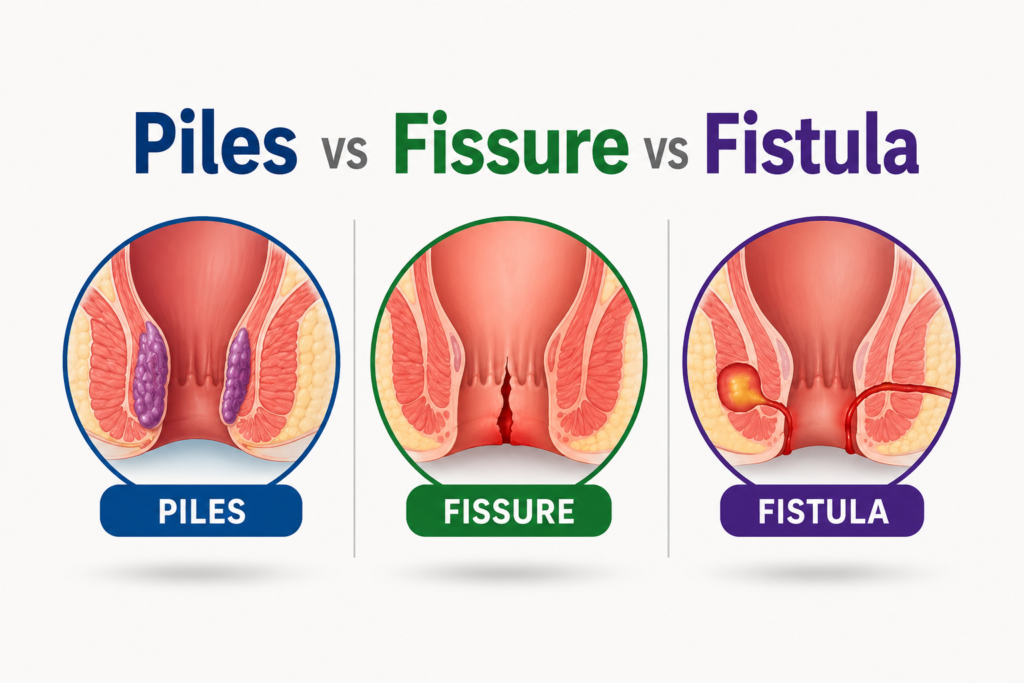
Piles vs Fissure vs Fistula – Symptoms, Causes & Key Differences Explained Introduction: Why These Conditions Are Often Confused Pain, discomfort, or bleeding in the anal region is often quickly assumed to be piles. However, not all such symptoms point to a single condition. Piles, fissures, and fistulas are three different anorectal problems that affect the same area but have very different causes, symptoms, and treatments. Understanding the difference is important because incorrect assumptions can delay proper care and worsen the condition. What Are Piles, Fissure, and Fistula? Piles, also known as hemorrhoids, are swollen veins in the rectum or around the anus. They can be internal or external and are usually caused by increased pressure in the lower rectum. Common factors include chronic constipation, straining during bowel movements, a low-fiber diet, prolonged sitting, pregnancy, and obesity. While early-stage piles may seem manageable, neglecting them can lead to more serious issues. Is Piles Dangerous If Left Untreated? What Are Piles (Hemorrhoids)? Piles, also known as hemorrhoids, are swollen and inflamed blood vessels in the rectum or around the anus. They usually develop due to increased pressure in the lower rectum, often caused by constipation, straining during bowel movements, or prolonged sitting. Piles may cause painless bleeding, itching, or a noticeable lump near the anus. What Is an Anal Fissure? An anal fissure is a small tear or cut in the lining of the anus. It is commonly caused by passing hard or large stools. Unlike piles, fissures are known for causing sharp pain during and after bowel movements. The pain can be intense and may last for several hours. What Is an Anal Fistula? An anal fistula is an abnormal tunnel that forms between the anal canal and the skin near the anus, usually due to an infection. It often develops after an abscess that did not heal properly. Fistulas are more serious and may lead to persistent discharge, swelling, and recurring infections. Key Differences Between Piles, Fissure, and Fistula Difference Based on Cause Piles are mainly caused by pressure and swelling of veins, fissures occur due to tearing of the anal lining, and fistulas result from infections that create abnormal connections in the tissue. Difference Based on Symptoms While piles often present with painless bleeding and mild discomfort, fissures are associated with severe pain during bowel movements. Fistulas, on the other hand, commonly cause pus discharge, swelling, and repeated infections. Difference Based on Severity Piles and fissures can often be managed with early treatment and lifestyle changes. However, fistulas usually require medical procedures or surgery for complete healing. Common Symptoms You Should Not Ignore Symptoms of Piles Bleeding during bowel movements without significant pain Itching or irritation around the anal area Swelling or a lump near the anus Discomfort while sitting Symptoms of Fissure Sharp, cutting pain during bowel movements Burning sensation after passing stool Visible tear or crack in the anal skin Fear of passing stools due to pain Symptoms of Fistula Persistent pus or fluid discharge Pain and swelling near the anus Recurrent infections or abscess formation Irritation of the surrounding skin Causes & Risk Factors These conditions are often linked to lifestyle habits and certain medical factors. A low-fibre diet, chronic constipation, and straining during bowel movements are common contributors. Prolonged sitting, obesity, and lack of physical activity can also increase the risk. Infections play a major role in the development of fistulas, while pregnancy can increase the chances of developing piles. When Should You See a Doctor? It is important not to ignore symptoms like bleeding, persistent pain, or discharge. If your symptoms last more than a few days or keep recurring, consulting a specialist is essential. Early diagnosis helps prevent complications and ensures you receive the right treatment for the specific condition. Diagnosis & Treatment Approach How Doctors Diagnose the Condition Doctors usually begin with a physical examination and a detailed medical history. In some cases, additional tests may be recommended to confirm the diagnosis and rule out other conditions. Treatment Options for Each Condition Treatment depends on the condition and its severity. Piles are often managed with dietary changes, medications, or minimally invasive procedures. Fissures usually heal with proper diet, medications, and lifestyle adjustments. Fistulas, however, typically require surgical treatment to remove the infected tract and prevent recurrence. Why Proper Diagnosis Matters Although these conditions may appear similar, their treatments are very different. Self-diagnosis can lead to incorrect treatment and prolonged discomfort. A proper medical evaluation ensures accurate diagnosis and effective management. Prevention Tips for Better Anal Health Maintaining good bowel habits is key to preventing these conditions. A fibre-rich diet, adequate hydration, and regular physical activity help ensure smooth digestion. Avoid straining during bowel movements and respond promptly to the urge to pass stool to reduce pressure on the anal region. Final Thoughts: Know the Difference, Choose the Right Care Piles, fissures, and fistulas may share similar symptoms, but they are distinct conditions requiring different approaches to treatment. Understanding these differences can help you seek timely care and avoid complications. If you are experiencing any discomfort, pain, or unusual symptoms, do not delay seeking professional advice.

Uncategorized

Kshar Sutra Treatment vs Laser for Fistula: Which is Better?

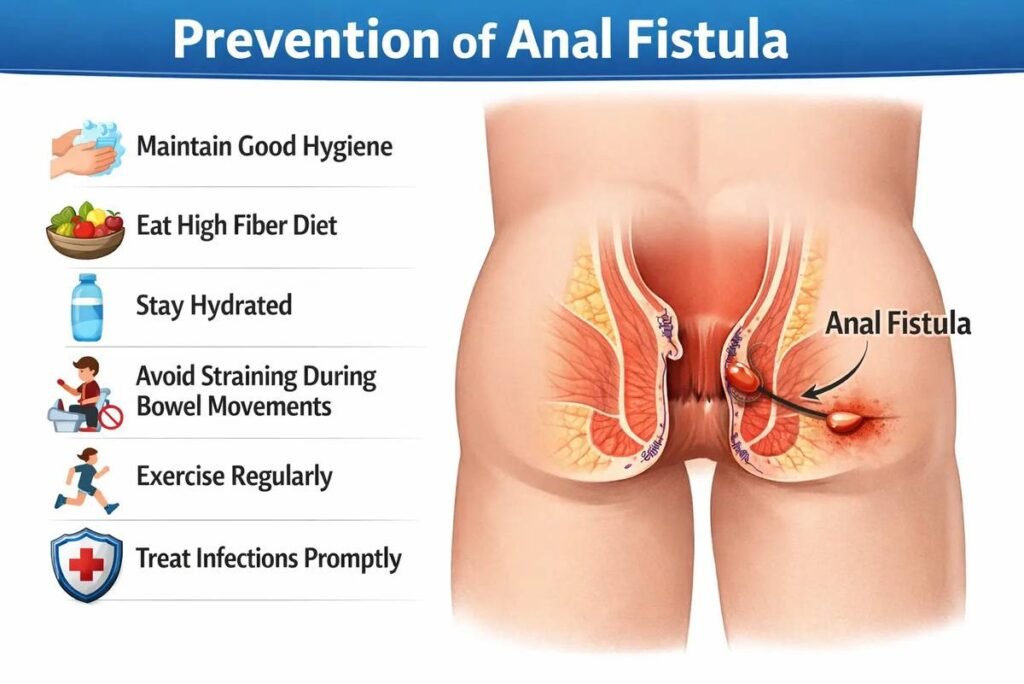
Introduction: Understanding Your Treatment Options Anal fistula is a painful condition that often causes discomfort, discharge, and recurring infections. Many patients feel confused when choosing the right treatment, especially with options like Kshar Sutra Treatment and modern laser procedures available today. Both approaches are effective, but they work differently and are suited for different types of cases. Understanding these options can help you make a more informed decision. What Is an Anal Fistula? An anal fistula is an abnormal tunnel that forms between the anal canal and the skin near the anus. It usually develops after an infection or abscess that has not healed completely. Common symptoms include pain, swelling, and pus discharge. Since fistulas rarely heal on their own, proper medical treatment is essential. What Is Kshar Sutra Treatment? How Kshar Sutra Treatment Works:Kshar Sutra Treatment is a traditional Ayurvedic technique that uses a medicated thread placed inside the fistula tract. This thread gradually cuts through the tract while promoting healing from within. The process involves periodic replacement of the thread until the tract is completely healed. Benefits of Kshar Sutra Treatment:This method is known for being minimally invasive and effective, especially in complex or recurrent fistulas. It allows controlled healing and has been used successfully for many years. It may also have a lower risk of recurrence in certain cases. What Is Laser Treatment for Fistula? How Laser Treatment for Fistula Works:Laser treatment for fistula is a modern, minimally invasive procedure that uses laser energy to close the fistula tract from inside. The procedure is precise and targets the affected area without causing major damage to surrounding tissues. Benefits of Laser Treatment:One of the main advantages of laser treatment is reduced pain and faster recovery. It involves minimal bleeding, shorter hospital stays, and allows patients to return to normal activities quickly. Kshar Sutra Treatment vs Laser for Fistula Difference in Treatment Approach:Kshar Sutra Treatment follows a gradual healing method using a medicated thread, while laser treatment for fistula uses advanced technology to seal the tract in a single or limited number of sessions. Difference in Recovery Time:Laser procedures generally offer quicker recovery and less downtime. In contrast, Kshar Sutra Treatment may take longer as it involves multiple sittings and gradual healing. Difference in Pain and Comfort:Laser treatment is usually associated with less discomfort after the procedure. Kshar Sutra Treatment may involve mild discomfort during the treatment period due to repeated thread changes. Difference in Effectiveness and Recurrence:Both treatments are effective, but the choice depends on the complexity of the fistula. Kshar Sutra Treatment is often preferred in complex or recurrent cases, while laser treatment for fistula is commonly used for simpler cases with quicker healing goals. Which Treatment Is Better for You? There is no one-size-fits-all answer. The best treatment depends on factors such as the type and severity of the fistula, your overall health, and your preference for recovery time. Patients looking for faster recovery may consider laser treatment for fistula, while those with complex conditions may benefit from Kshar Sutra Treatment. A specialist’s evaluation is essential to determine the right option. Why Expert Consultation Is Important Choosing between these treatments without proper medical guidance can lead to ineffective results or recurrence. A qualified specialist can assess your condition and recommend a personalized treatment plan. This ensures not only effective healing but also reduces the chances of complications. Recovery and Post-Treatment Care Regardless of the treatment chosen, proper aftercare is crucial. Maintaining hygiene, following dietary recommendations, and attending follow-up visits play a key role in recovery. A fiber-rich diet and adequate hydration can help prevent strain and support healing. The Right Choice Depends on Your Condition Both Kshar Sutra Treatment and laser treatment for fistula are effective in their own ways. The key is to choose the treatment that best suits your condition rather than following a general preference. Early diagnosis and expert guidance can ensure better outcomes and long-term relief.

Scroll to Top